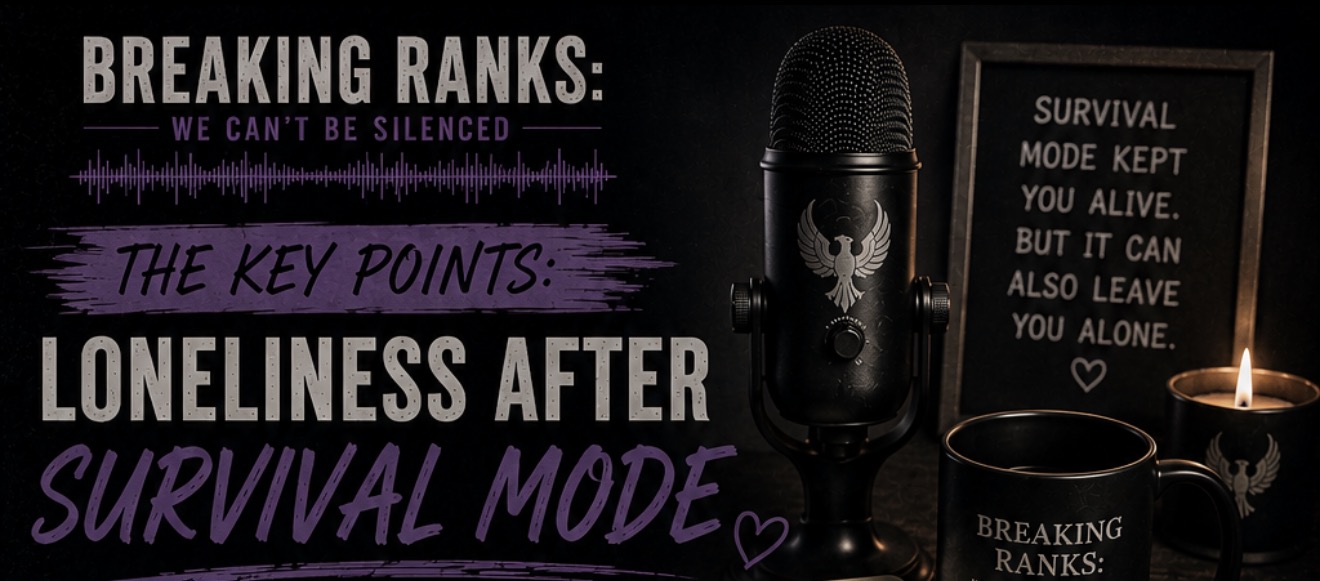
Key Points: The Loneliness After Survival Mode
Related Episode
The Loneliness After Survival ModeKey Takeaways
-
Survival mode masks the real damage
When you’re in crisis, your body and mind are laser…focused on getting through. It’s only when things calm down that you start feeling the weight of what actually happened…and that’s when the loneliness hits hardest. -
The silence after the storm is deafening
People show up during the emergency. They bring casseroles, they ask how you’re doing, they’re present. But once the immediate crisis passes, that support network often disappears, leaving you isolated with your pain. -
You can’t just “bounce back” from trauma
There’s this cultural expectation that once the worst is over, you should be fine. The truth? Recovery isn’t linear, and pretending you’re okay when you’re not just deepens the loneliness. -
Talking about it is harder than you think
Even when people are around, finding the right words to explain what you’re going through feels impossible. The gap between your internal experience and what you can actually communicate creates a profound sense of isolation. -
Community, not just survival, is what heals
You can’t heal alone. Real recovery happens when you find people who get it…whether that’s a therapist, a support group, or others who’ve walked similar paths. Connection isn’t a luxury; it’s essential. -
Naming the loneliness is the first step
You’re not broken for feeling isolated after surviving. Acknowledging that this phase is real and valid is where the healing begins. You’re not alone in feeling alone.
Want to hear more about navigating the aftermath of trauma? Listen to the full episode to dive deeper into these stories and discover what true recovery can look like.